
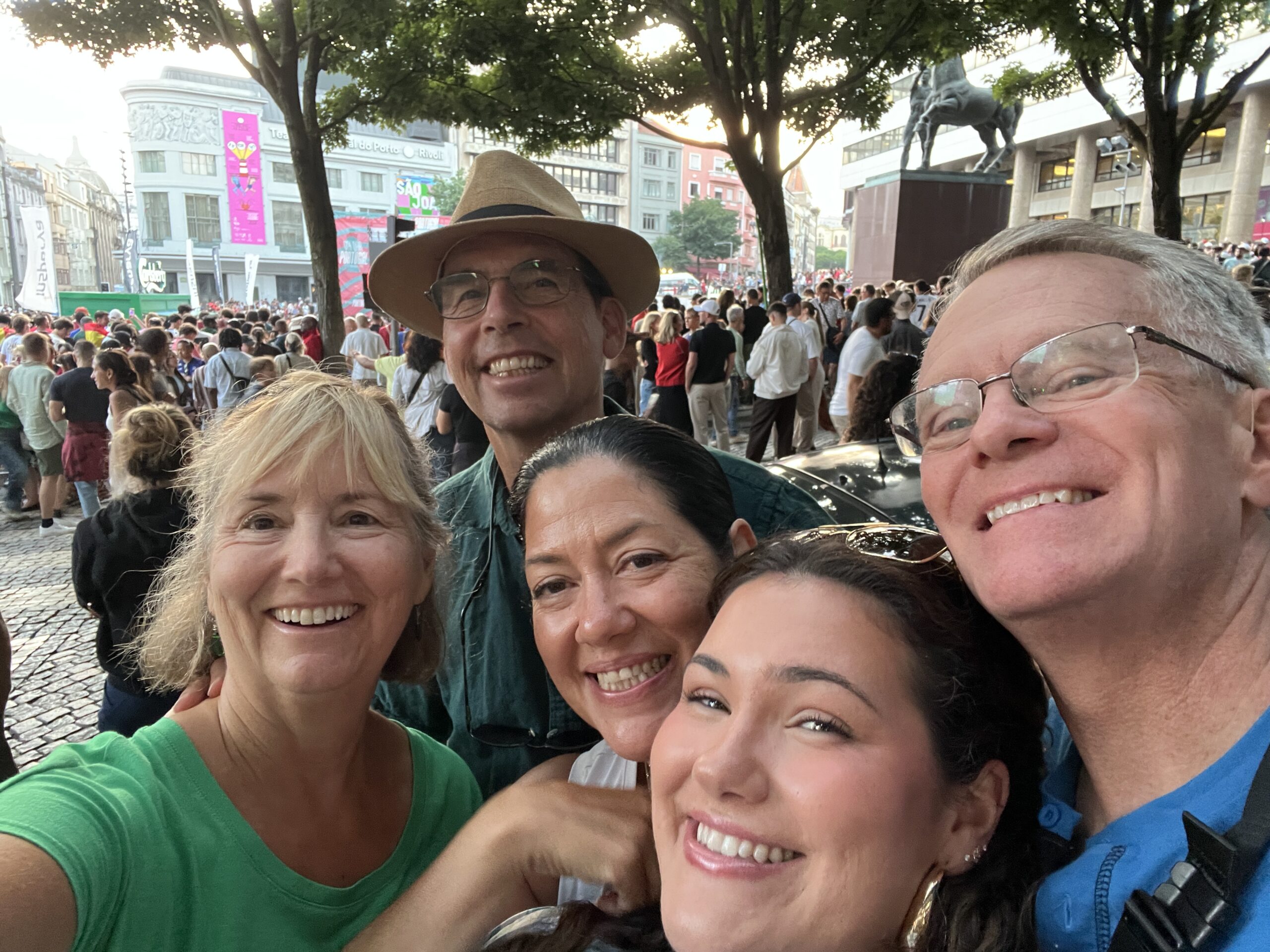
We were fortunate to be traveling with extended family in Portugal and Spain during the final weeks of the World Cup—and we were quickly swept up in the wonderful fandom of it all.
Both of my children played soccer when they were young, so I have watched a lot of games over the years. But watching the sport at this level—and experiencing it surrounded by people deeply invested in every pass, save, and goal—reminded me of a few truths that extend far beyond soccer:
1. “You have to play the game you have been given.”
A commentator said this during the final, and the words have stayed with me. So often, we spend our energy fixated on a different reality: If only we had more money, a different boss, better political leaders, or good health. Some of those circumstances may be deeply unfair, and wanting them to change is entirely reasonable. But we still have to live the life in front of us.
Given the game I have been handed today, what choices are mine to make? How can I make the best of what is available to me?
These questions help me stop wrestling with what I cannot control and focus on what is truly mine to do.
2. Most of the game has no scoring.
There are very few goals in most soccer games. The players use enormous amounts of physical and mental energy moving the ball up and down the field—often without producing an obvious “win.” That feels a lot like life.
We can work hard for a long time without seeing a breakthrough. Most of our efforts go unacknowledged. No one cheers when we answer one more email, have one more difficult conversation, or take one more small step toward something that matters.
I find this especially helpful when I feel as though I am in a slog. If those players can play their hearts out for a score of nil-nil, I can keep showing up, too.
3. Coming together matters—even when we do not get the outcome we want.
Portugal played Spain in the Round of 16 while we were in Porto. The match seemed to take over the city. Huge screens appeared in public squares, and every bar and restaurant was showing the game.
Standing in those crowds, all of us hoping for a Portuguese victory, was exhilarating. Portugal did not win, but we still loved being part of that shared energy. And when it was over, everyone quietly dispersed and went home. There were no major fights or histrionics—just collective disappointment and then a return to everyday life.
It made me think about the political protests and community gatherings of the past few years. Coming together does not always produce an immediate change in policy or leadership. But it reminds us that we are not alone. Sometimes simply standing among people who share our hopes helps us remember: These are my people, and we are still here.
4. We do not have to pay attention to something simply because everyone else is.
We watched—or tried to watch—Spain play in the quarterfinals from Zumaia, a small town in Spain’s Basque Country.
Hearing cheers from a nearby bar, we rushed over, hoping to join the World Cup excitement. But the television was playing quietly in the background. Nearly everyone was focused instead on two singers performing on the terrace. People sang along, applauded, and cheered them on. Even when Spain scored its first goal, the crowd barely noticed.
I loved that. I sang along too, even though I didn’t know the songs and barely know Spanish. It was joyful!
The world may insist that there is one big story we are all supposed to follow. But we are allowed to direct our attention toward what gives us meaning, purpose, and joy. I often miss the “big story” of the day because I would rather fill my life with small, meaningful moments. Zumaia reminded me that perhaps I am not missing the real story after all.
5. Sometimes we need a moment to recover.
After the hard-fought final match, my colleague shared this photo of her nephew in his Messi jersey, overcome by the result—but still holding onto his dinosaurs.
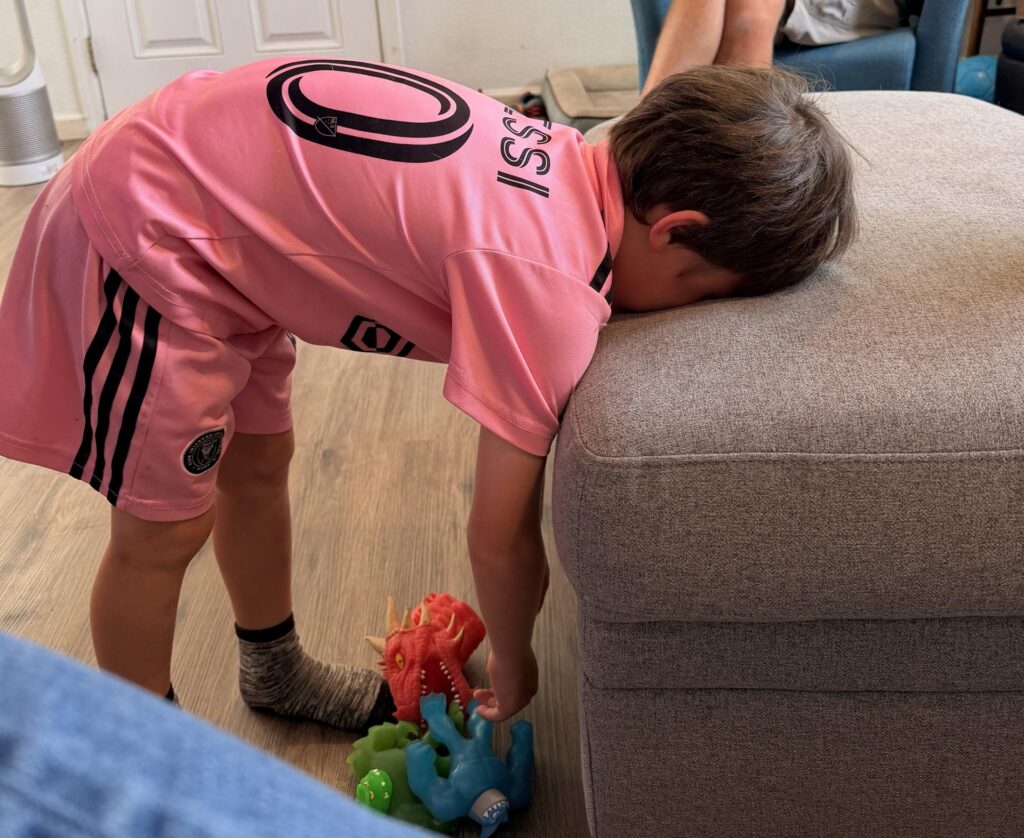
It made me laugh, but it also captured something important. When we care deeply, disappointment takes something out of us. We do not always have to bounce back immediately, find the lesson, or prepare for the next challenge. Sometimes we need to put our heads down and feel the loss for a while.
Recovery is not giving up. It is part of resilience—and part of being ready to play again.
The World Cup was exciting, but what stayed with me was not who won or lost. It was the reminder to work with the life in front of me, keep going when the score does not reflect the effort, find strength in community, choose where I place my attention, and give myself time to recover.
Not a bad set of lessons from a game. Which one do you most need to remember right now?
With resilience,
Meri and the Dovetail Team
P.S. One more thing the World Cup reminded me: It was joyful to see people from all over the world coming together—bringing different languages, cultures, and histories to one game. I hope you experienced a taste of that joy, too.